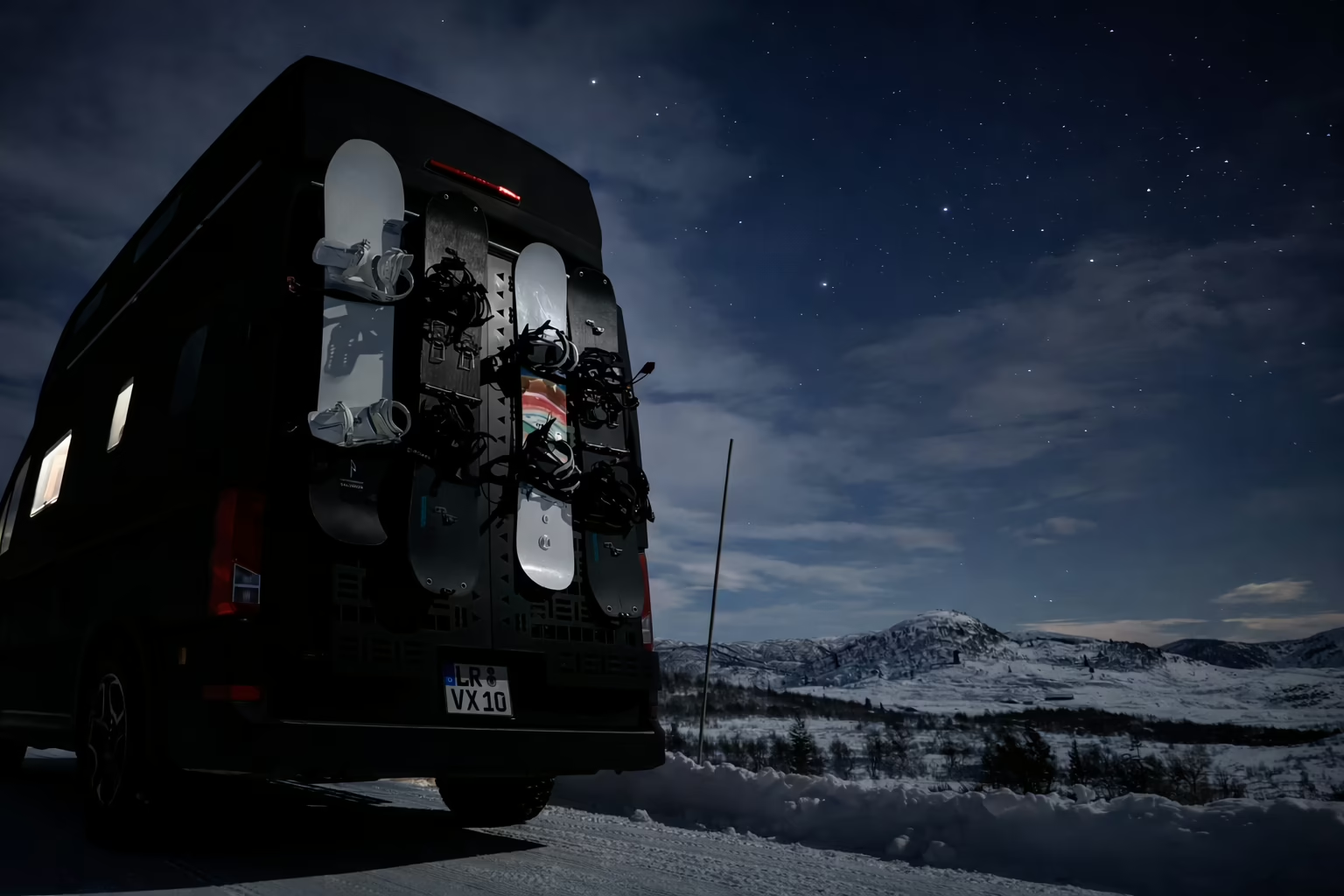
"Autonomous" is written on almost every camper today. But true autonomy means more than a solar panel on the roof. It means staying off-grid for several days – without gas, without external power, and without compromising on comfort.
Here are 6 clear features with concrete benchmarks.
1. Battery System That Actually Carries the Load
The battery is the heart of every autonomous system.
Benchmark: From approximately 400 Ah, autonomy becomes realistic in daily use. Expandable up to 1,200 Ah for maximum freedom.
Essential features:
- Integrated battery management
- Secure installation
- Expandability
High-quality systems use carbon-kevlar enclosures for durability, vibration resistance, and impact protection during off-road use.
2. Solar Performance Matched to Travel Style
Realistic values: Base approximately 480 W, expandable up to approximately 800 W for more freedom.
What matters is not just peak performance, but daily energy generation. Modern systems increasingly use flexible, ultra-thin solar panels instead of rigid modules – lighter, flatter, and more resistant to vibrations and terrain stress.
3. Gas-Free or Not: The Autonomy Threshold
Gas-free systems are superior for true autonomy because they:
- Eliminate dependency on refueling availability
- Reduce regulatory and safety complications
True autonomy relies strategically on electricity and diesel – not gas.
4. Efficient Consumers Over Bigger Capacity
True autonomy isn't just storage – it's storage + generation + efficiency.
Recommended components:
- LED lighting
- Efficient cooling
- Intelligent charging and inverter solutions
- Minimal standby consumption
Warning: If you notice at night that the camper is "constantly drawing power," the system design is flawed.
5. Energy Management You Understand (Without Stress)
Effective systems provide:
- Clear battery state-of-charge display
- Logical circuit organization
- Automatic protection against deep discharge and overload
Autonomy works when you don't have to constantly calculate daily energy consumption.
6. The Practical 48–72 Hour Off-Grid Test
The ultimate litmus test: Being able to stay off-grid for 2–3 days without sacrificing comfort.
- Cooking, cooling, and lighting work reliably
- Battery reserves remain sufficient even in bad weather
- Systems run quietly and reliably without workarounds
Conclusion
True autonomy isn't a single feature, but a system. When battery, solar, consumption, and management work together, you achieve real independence – freedom without planning stress.