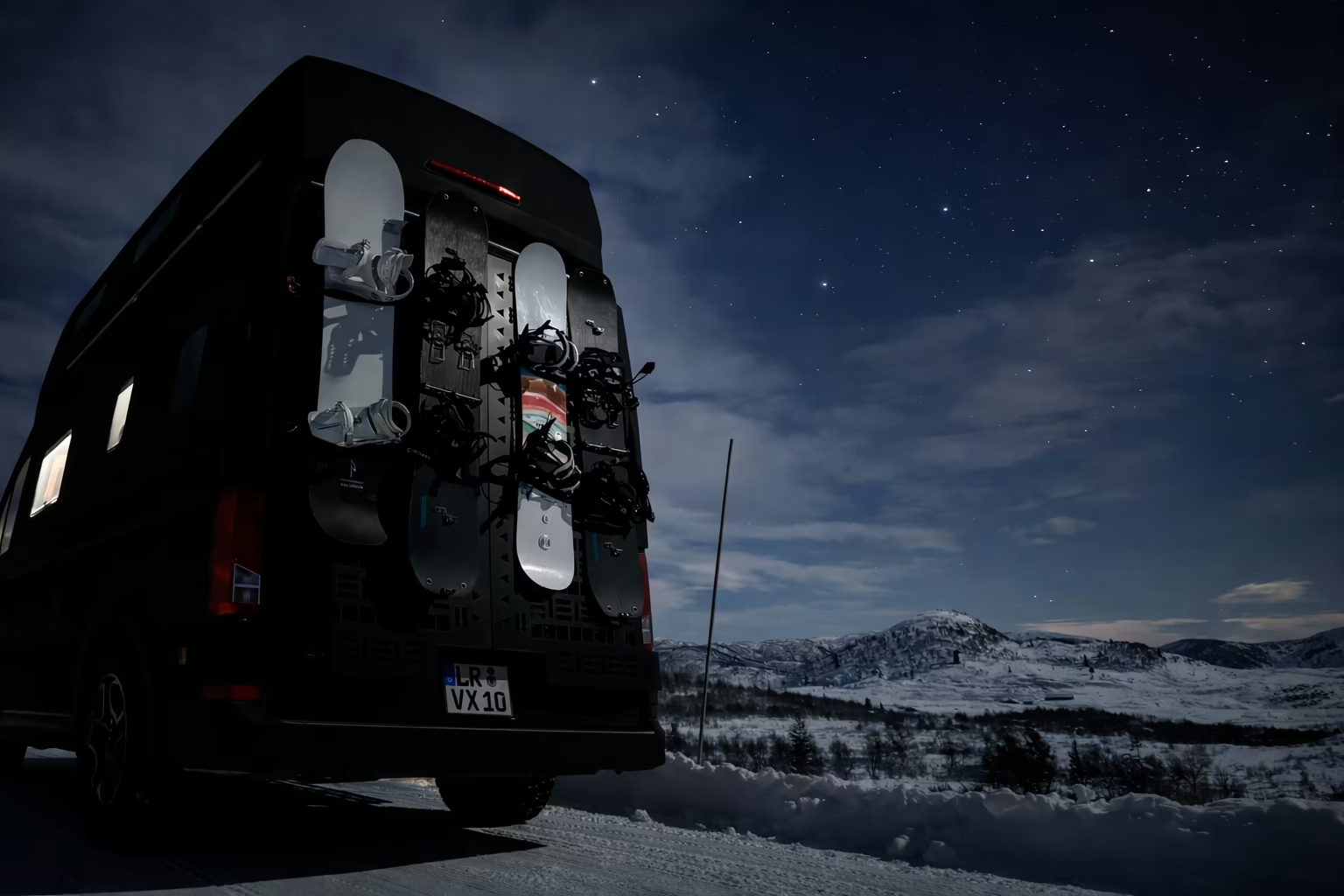
Carbon sounds like motorsport, aviation, or high-tech – and that's exactly where it comes from. In campervan construction, carbon isn't a marketing gimmick, but a decisive factor if you want to stay under 3.5 tons, drive off-road, and still have comfort.
1. Maximum Weight Savings with Equal Stability
Weight is the limiting factor in camper construction – especially for 3.5-ton vehicles.
Carbon offers:
- Extremely high strength
- At significantly lower weight than aluminum or wood
In practice:
- Less structural weight = more room for technology, water, battery
- Better axle loads & driving dynamics off-road
This is exactly why carbon isn't luxury, but necessity when off-road is meant seriously.
2. Higher Stability Off-Road
Off-road means:
- Articulation
- Vibrations
- Impacts from trails, snow, gravel
Carbon is:
- Torsionally rigid
- Impact resistant
- Dimensionally stable even under continuous load
The result:
- Less creaking and fatigue
- Longer-lasting structures
- Higher safety on rough trails
3. Perfect for Sandwich Constructions
In modern camper construction, carbon is mostly used as "carbon sandwich":
- Carbon outer layers
- Light core (e.g., foam or honeycomb)
Advantages:
- Extremely rigid
- Very light
- Excellent insulation values
Ideal for walls, roofs, extensions like rear widening or sliding doors.
4. Better Foundation for 3.5-Ton Concepts
Many campers fail not because of technology, but because of weight.
Carbon helps:
- Keep the curb weight low
- Still install high-quality equipment
- Stay under the 3.5-ton limit
Especially with all-wheel drive, large battery systems, and off-road equipment, carbon is often the decisive difference whether a concept is even feasible.
5. High Resistance to Moisture & Temperature
Carbon:
- Doesn't swell
- Doesn't rust
- Doesn't warp in heat or cold
This makes it ideal for:
- Winter use
- Humid regions
- Extreme temperature changes
A clear advantage over classic wooden constructions.
6. Ideal for Protecting Sensitive Technology
Modern campers are full of sensitive technology:
- Lithium batteries
- Electronics
- Control units
Carbon – especially carbon-kevlar constructions – offers:
- High impact resistance
- Vibration-resistant housings
- Very low weight
Especially in off-road use, this is crucial for safety, longevity, and reliability.
7. Premium Appearance & Future-Proofing
Carbon stands for:
- High-tech
- Precision
- Manufacturing quality
In camper construction, this means:
- Timeless material
- No "cheap build" feeling
- Value stability
Carbon isn't a trend, but a future-proof material for modern off-road and autonomy concepts.
Summary: When Carbon in a Camper Really Makes Sense
Carbon is especially worthwhile when you:
- Want to stay under 3.5 tons
- Drive off-road
- Travel autonomously
- Integrate high-quality technology
- Think long-term
Then carbon isn't "nice-to-have," but a key element of modern camper concepts.